Rezo Deep Dive: introduction
Nine deep dives take one representative 2.1 GW offshore concession from a business-as-usual design towards a lower-cost grid connection. This post explains what Rezo is, why the case exists and where to start.
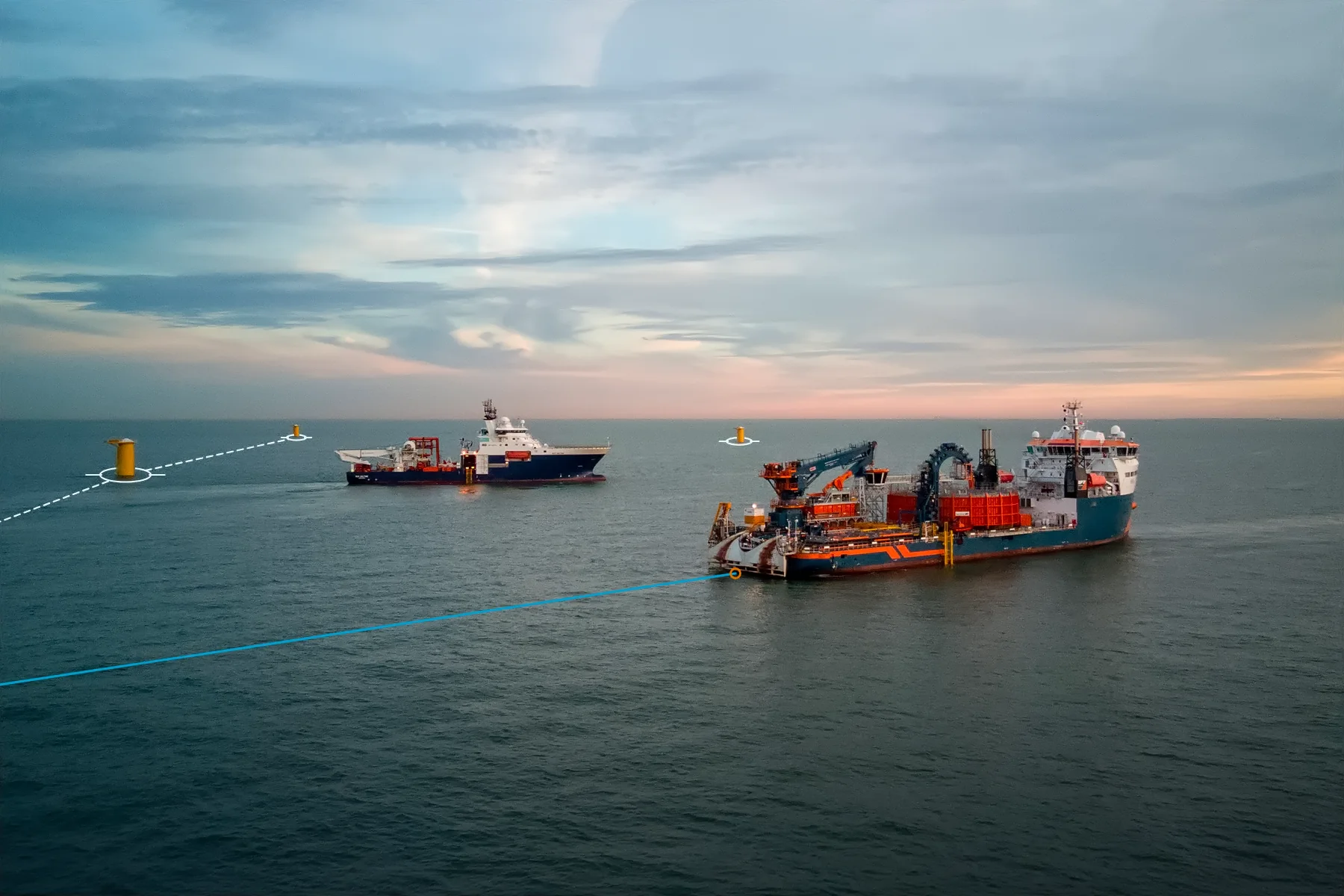

Rezo optimisation
How far can the overall cost of an offshore wind grid connection be reduced? It depends on the concession, so this series shows it on one.
Inter-array and export cabling are among the largest cost items in an offshore wind project. This series follows one project through nine deep dives, using Rezo, our cloud-based optimisation platform, to show what optimisation can achieve in practice.
Why the problem is hard
A GW-scale project means hundreds of kilometres of inter-array cable, a substation that could sit almost anywhere in the concession, a collection voltage, an export technology, and a seabed full of exclusion zones and high-cost installation areas. Every turbine added multiplies the design space.
For an offshore wind farm like this, the number of ways to group the turbines into strings alone is far beyond anything that can be checked. Even at a million layouts per second, going through them one by one would take many orders of magnitude longer than the age of the universe. And that is before routing, collection voltage, cable sizes or substation position come into play.
Exhaustive search is therefore not feasible. In practice, engineers evaluate a handful of options and pick the best of those. The gap between the best of a handful and the actual optimum is where the savings lie.
What Rezo does
Rezo was developed following our experience on the Cordoba project. It evaluates substation positions and cable routes together, rather than comparing a handful of fixed layouts.
You bring in the wind turbine layout, site information, cable specifications and project constraints such as exclusion zones, high-cost areas and existing infrastructure. Rezo then optimises lifecycle cost: capital expenditure (CAPEX) plus the net present value (NPV) of operating expenditure (OPEX). OPEX covers active power losses and reliability losses, meaning the energy not supplied because of outages.
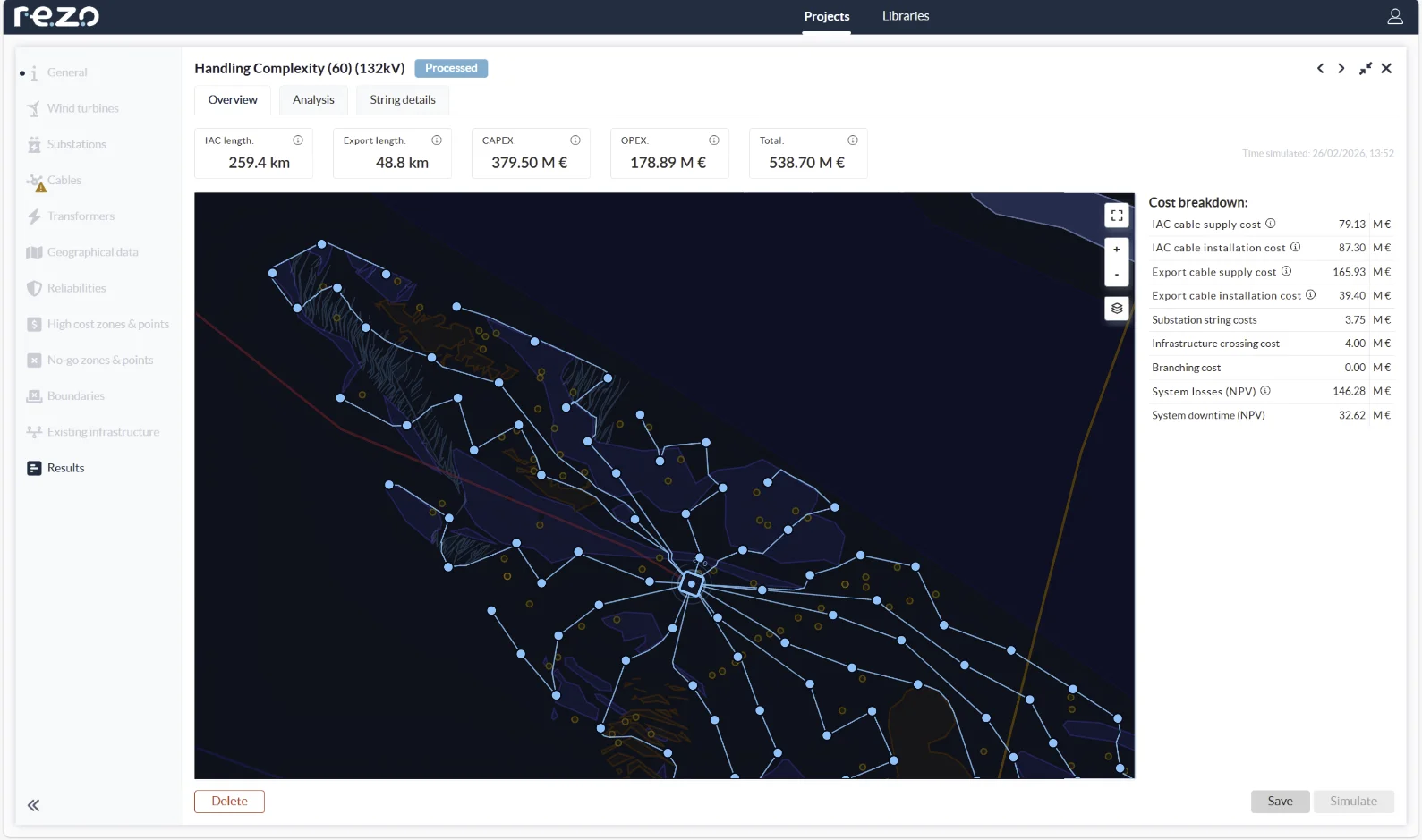
Most runs complete in minutes, so the design can be re-optimised as the layout, seabed data or cable choices change, rather than restarted from scratch. Rezo includes a curated cable database and a template library, and supports radial, branched and looped topologies. It runs on secure cloud infrastructure, and project data is never shared with third parties.
Rezo is available in two ways: as a web application, where your team runs the optimisation directly, or as expert-led engineering, where our team runs it and delivers ready-to-implement designs. Find out more on the Rezo page.
What the series is
Pacific Wind is a representative reference case: a 2.1 GW offshore concession with 105 × 20 MW turbines, roughly 50 km from shore. We built it so we can present and discuss aspects of offshore topology optimisation.
The design we start with takes a business-as-usual approach. Over nine posts, we set that baseline and then test each assumption in it, one at a time, keeping a running total. The starting system cost is €2605M; each post shows how far it moves.
The series highlights seven Rezo capabilities:
- Lifecycle cost optimisation: CAPEX and the NPV of OPEX in a single objective, with OPEX covering active power losses and reliability losses (expected energy not supplied due to outages), so cable sizing considers a lifetime of losses and downtime
- Route finding: navigating exclusion zones, high-cost installation areas and existing infrastructure
- Cable design and selection: solving the number of strings, collection voltage and cable cross-sections jointly, and selecting the most suitable cable types from a library of candidate types
- Topology selection: pricing radial and branched configurations so design complexity is a deliberate choice
- Export technology selection: quantifying what the export architecture choice is worth
- Substation siting: a full cost surface across candidate positions, showing what the offshore substation location is worth
- Sensitivity analysis: re-optimising the design across the range of an uncertain input to show how robust it is
Who this series is for
If you develop, design or review offshore wind grid connections, this series is for you: developers weighing up a concession, engineering firms and contractors designing the cabling and substation, and transmission system operators (TSOs) assessing connection options. Each deep dive takes one design decision and shows what it does to total cost, so you can see which decisions matter most for a project like yours.
The first deep dive, which sets out the starting design, is coming soon. Follow Enersynt on LinkedIn to see each one as it lands. Have a concession where this could help? Get in touch.
Further Insights
Order early, order right: taking long-lead equipment off the critical path
HVAC or HVDC? Why substation position changes the answer
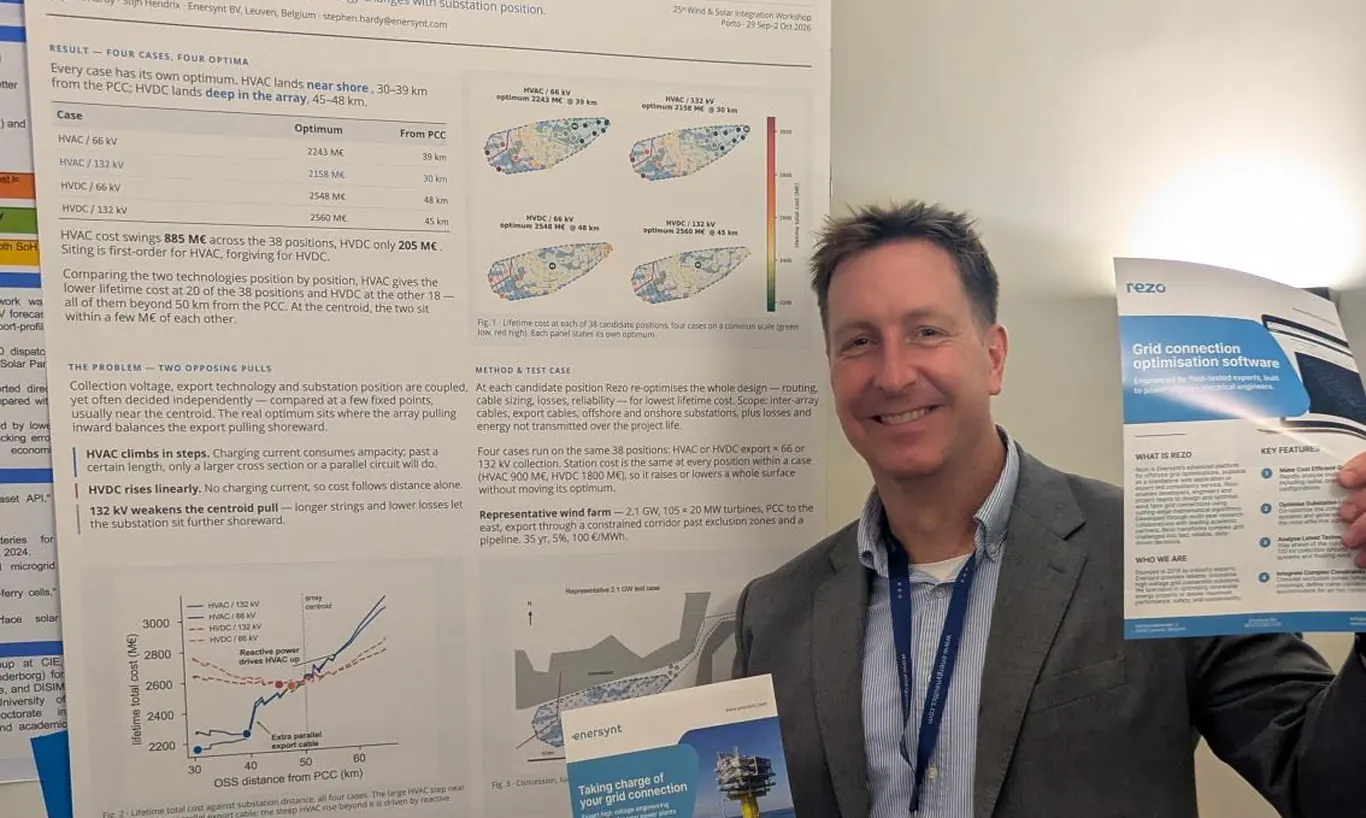
Meet Enersynt in Hamburg and Porto